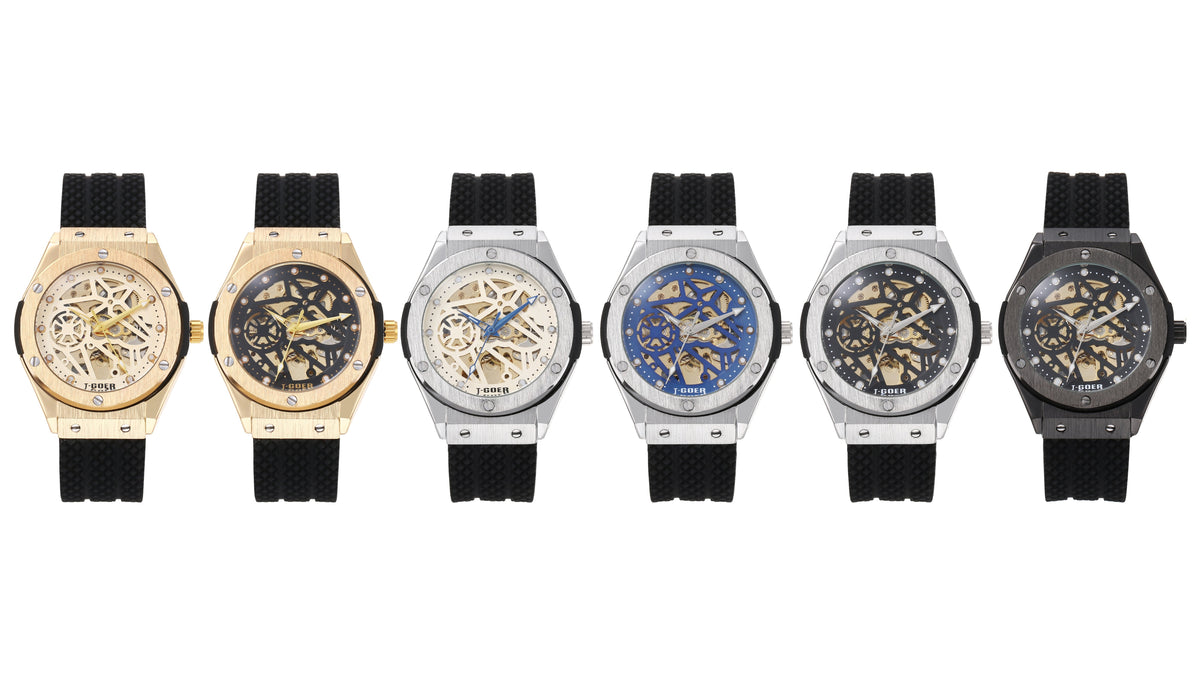
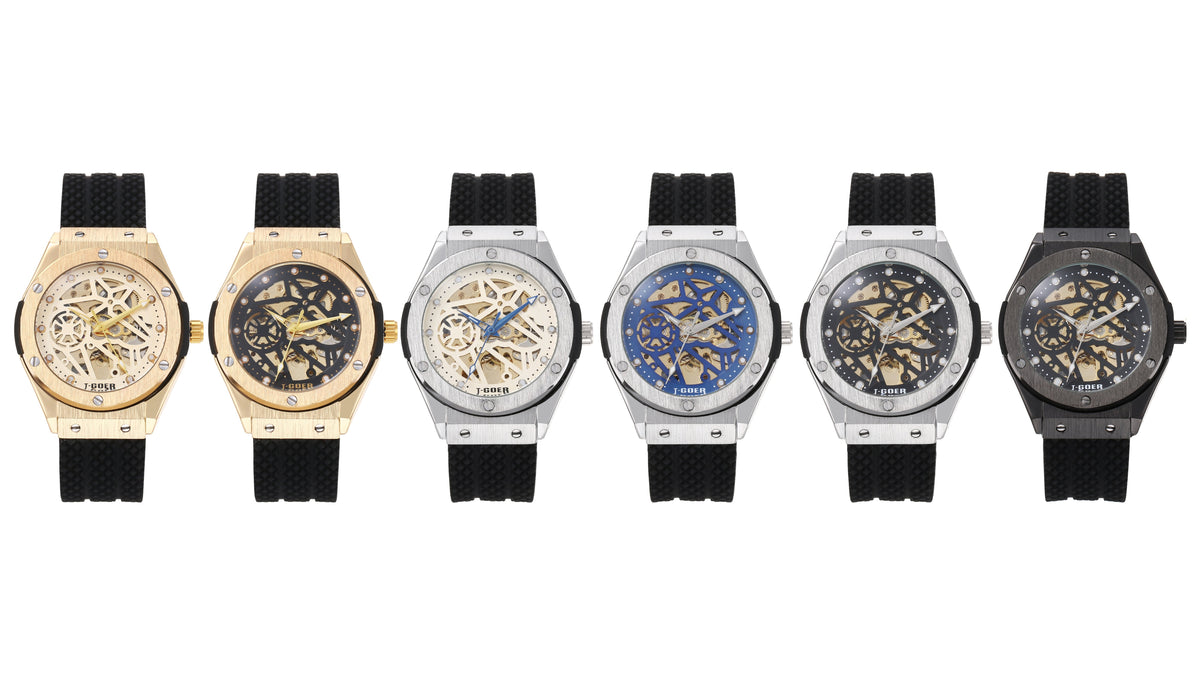
A lot of people see skeleton mechanical watches online and assume the pricing is mostly about branding or aesthetics.
But from a manufacturing point of view, the real cost structure is quite different.
I work with mechanical watch production in China, and here is a simplified breakdown of what actually goes into the cost:
⚙️ 1. Movement (the heart of the watch)
This is the most important part.
- Automatic or manual mechanical movement
- Quality level (basic / mid / high grade)
- Stability testing before assembly
👉 The movement alone can determine more than 40% of the total cost.
🏗️ 2. Case & materials
The case is not just “metal around the watch”.
It includes:
- Stainless steel or alloy material
- CNC machining or die casting
- Surface finishing (polishing / brushing / coating)
Small differences in finishing can significantly change the cost.
👷 3. Assembly labor
Mechanical watches require manual work.
- Hand assembly of movement
- Dial alignment
- Case sealing
- Regulation and timing adjustment
Even small errors can affect accuracy.
🔍 4. Quality control (QC)
Before shipment, every watch is tested for:
- Time accuracy
- Power reserve
- Water resistance (basic level)
- Visual defects
This step is often underestimated, but very important for long-term reliability.
💡 Final thoughts
From what I’ve seen, skeleton watches are not just “fashion products”.
They are a combination of:
👉 mechanical engineering
👉 manual craftsmanship
👉 industrial production control
That’s why prices can vary so widely between brands.
If anyone is interested in how microbrands develop their own watch designs or work with OEM factories, I can share more insights from the production side.
We also support OEM/ODM production for small watch brands and startups, but I’ll keep that separate unless someone is curious.
www.gzgoerwatc.com